

 by Simo Naboussi
 When we think of robotics, we usually picture steel, silicon, and complex code. Nevertheless, a profound paradigm shift is underway in biomedical laboratories worldwide: the introduction of resident machines grown from single human lung cells. Known as "anthrobots," the microscopic, self-assembling organic robots actively tighten our definitions of every machine and organism.
Unlike previous amphibian-mainly based biobots (Xenobots), Anthrobots grow from completely unmodified wild human DNA. This step forward, they can theoretically be made from the affected own tissue, circumventing the crippling barriers of immune rejection and they offer a glimpse of a new generation of personalized medicine, in which bespoke, microtherapists will self-clear vascular blockages, provide focused adjuvants to mobile revenants
Beyond immediate clinical utility, anthrobots reveal hidden intelligence within human tissue. When those cells are released from their original roles, they spontaneously rewrite their gene expression, turning back their old clocks of biological aging and entirely new physical architecture This whole program dives into the origins, biological mechanics, and profound implications of anthrobots. They're ready.
To fully grasp the sheer magnitude of the Anthrobot breakthrough, it is necessary to trace the evolutionary lineage of biological robots back to their origins. The concept of a "biobot" first transitioned from theoretical science fiction into observable reality with the creation of Xenobots. Developed by a collaborative team led by Michael Levin at Tufts University and Josh Bongard at the University of Vermont, Xenobots were living, programmable organisms forged from the embryonic skin and heart muscle cells of the African clawed frog (Xenopus laevis).
These amphibian biobots were genuinely astonishing. They could navigate fluid environments, push microscopic payloads, heal themselves after being lacerated, and even replicate kinematically by sweeping loose cells into piles that would mature into new Xenobots. However, while Xenobots served as a brilliant proof-of-concept for synthetic morphology, their creation faced severe developmental bottlenecks. Sculpting Xenobots was an incredibly labor-intensive process, requiring researchers to manually carve embryonic tissue using microscopic forceps and cauterizing electrodes to achieve specific shapes dictated by supercomputer evolutionary algorithms. Furthermore, their amphibian origins meant that introducing them into a human body would immediately trigger a catastrophic immune response, rendering them unsuitable for direct internal medical interventions.
This limitation raised a pivotal scientific question that would drive the next phase of research: Were the remarkable capabilities of Xenobots solely reliant on the highly plastic, malleable nature of amphibian embryonic cells, or could adult, fully differentiated mammalian cells exhibit the same latent abilities?
The answer arrived through the pioneering work of researcher Gizem Gumuskaya, a synthetic biologist with a background in architecture, working alongside Michael Levin. By utilizing adult human somatic cells—specifically, ciliated epithelial cells from the trachea—the team successfully cultivated the world's first Anthrobots. The monumental leap from Xenobots to Anthrobots resolved multiple critical barriers in the field of biorobotics.
| Feature Comparison | Xenobots (Amphibian Biobots) | Anthrobots (Human Biobots) |
|---|---|---|
| Cellular Origin | Embryonic stem cells from the African clawed frog (Xenopus laevis). | Adult somatic cells (tracheal epithelium) from human donors. |
| Construction Method | Manual surgical sculpting using microscopic forceps and scalpels guided by AI algorithms. | Autonomous self-assembly in a laboratory dish driven by cellular intelligence. |
| Immunocompatibility | Highly immunogenic; incompatible with human physiological environments. | Fully biocompatible; can be derived directly from the target patient's own tissue. |
| Locomotion Mechanism | Relied on the spontaneous contraction of embryonic heart muscle cells. | Propelled entirely by the coordinated waving of microscopic, hair-like cilia. |
| Scalability | Extremely low; each bot required individual manual crafting. | Massively scalable; thousands can self-assemble simultaneously in parallel swarms. |
By achieving autonomous self-assembly without the need for manual micro-surgery, Anthrobot production became infinitely more scalable. More importantly, because Anthrobots are derived from human somatic cells, they can theoretically be cultivated using a patient's own tissue, effectively eliminating the risk of immune rejection without the need for dangerous and debilitating immunosuppressant drugs. The cells remain entirely wild-type; they undergo absolutely no genetic modification, transgenesis, or DNA editing. This transition demonstrated that the ability to form novel, functional anatomies with unique behaviors is not restricted to amphibian embryos—it is a fundamental, latent feature of wild-type human cells waiting to be unlocked through environmental cues.
The creation of an Anthrobot is a masterclass in exploiting cellular plasticity. For decades, traditional biological dogma dictated that adult human cells, once differentiated into a specific tissue type (such as lung, liver, or skin), were rigidly locked into their designated roles, functioning essentially like specialized cogs in a larger machine. The Anthrobot proves that these cells retain an extraordinary capacity to reinvent themselves when liberated from the architectural constraints of the body.
In the human respiratory system, the trachea is lined with mucosal epithelial cells equipped with microscopic, hair-like structures called cilia. Within the body, the natural and singular function of these cilia is to beat rhythmically, forming a mucociliary escalator that clears the airways by pushing mucus, dust, and trapped bacterial debris upward toward the mouth to be swallowed or expelled. These cells live quiet, highly specialized lives performing this one vital task for decades.
The birth of an Anthrobot begins when researchers extract a single adult human lung cell and place it into a specialized extracellular matrix. Over the course of approximately two weeks, the solitary cell multiplies, organizing its progeny into a multicellular organoid. However, the critical engineering breakthrough lies in a specific microenvironmental manipulation. In standard in vitro organoid cultivation, airway cells naturally form "apical-in" structures. In this configuration, the cilia grow on the inside of a hollow sphere, essentially creating a microscopic, enclosed lung.
To engineer a mobile biobot, researchers modify the culture environment, transferring the cellular cluster into a minimally viscous and adhesive habitat. This chemical and physical shift prompts the cells to adopt an "apical-out" configuration. The cilia, rather than pointing inward, bloom on the exterior surface of the multicellular sphere.
In this new morphology, the waving hairs that once acted as a stationary escalator for mucus are instantly repurposed into a highly sophisticated biological propulsion system. The Anthrobot functions much like a microscopic submarine, using its ciliary thrusters to swim through aqueous environments with remarkable agility and intent. This transformation requires no motors, no batteries, and no synthetic electronic components; the entity is powered entirely by the intrinsic metabolic energy of human biology.
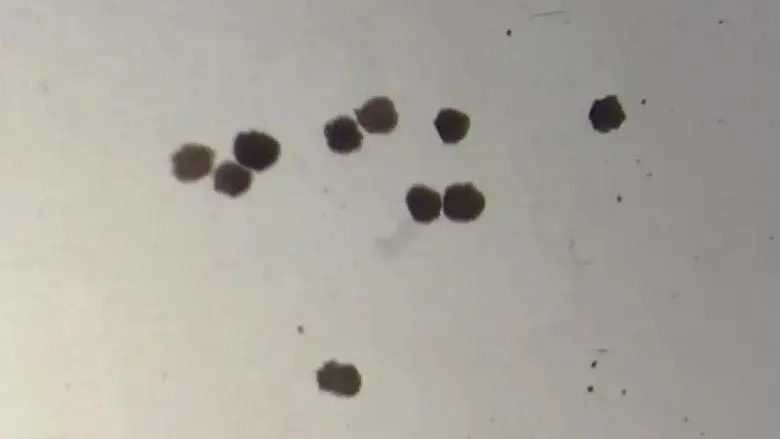
During the self-assembly process, the human tracheal cells do not conform to a single, monolithic blueprint. Instead, they exhibit a fascinating degree of morphological variability, spontaneously organizing into discrete physical categories. Researchers observed that the physical architecture of an Anthrobot strictly dictates its precise movement patterns, demonstrating a deep, intrinsic link between structural anatomy and kinematics.
Ranging in size from 30 to 500 microns, the bots generally fall into three distinct morphotypes, each displaying highly recognizable primary features that map directly onto their phenotypic behavior:By achieving autonomous self-assembly without the need for manual micro-surgery, Anthrobot production became infinitely more scalable. More importantly, because Anthrobots are derived from human somatic cells, they can theoretically be cultivated using a patient's own tissue, effectively eliminating the risk of immune rejection without the need for dangerous and debilitating immunosuppressant drugs. The cells remain entirely wild-type; they undergo absolutely no genetic modification, transgenesis, or DNA editing. This transition demonstrated that the ability to form novel, functional anatomies with unique behaviors is not restricted to amphibian embryos—it is a fundamental, latent feature of wild-type human cells waiting to be unlocked through environmental cues.
The creation of an Anthrobot is a masterclass in exploiting cellular plasticity. For decades, traditional biological dogma dictated that adult human cells, once differentiated into a specific tissue type (such as lung, liver, or skin), were rigidly locked into their designated roles, functioning essentially like specialized cogs in a larger machine. The Anthrobot proves that these cells retain an extraordinary capacity to reinvent themselves when liberated from the architectural constraints of the body.
In the human respiratory system, the trachea is lined with mucosal epithelial cells equipped with microscopic, hair-like structures called cilia. Within the body, the natural and singular function of these cilia is to beat rhythmically, forming a mucociliary escalator that clears the airways by pushing mucus, dust, and trapped bacterial debris upward toward the mouth to be swallowed or expelled. These cells live quiet, highly specialized lives performing this one vital task for decades.
The birth of an Anthrobot begins when researchers extract a single adult human lung cell and place it into a specialized extracellular matrix. Over the course of approximately two weeks, the solitary cell multiplies, organizing its progeny into a multicellular organoid. However, the critical engineering breakthrough lies in a specific microenvironmental manipulation. In standard in vitro organoid cultivation, airway cells naturally form "apical-in" structures. In this configuration, the cilia grow on the inside of a hollow sphere, essentially creating a microscopic, enclosed lung.
To engineer a mobile biobot, researchers modify the culture environment, transferring the cellular cluster into a minimally viscous and adhesive habitat. This chemical and physical shift prompts the cells to adopt an "apical-out" configuration. The cilia, rather than pointing inward, bloom on the exterior surface of the multicellular sphere.
In this new morphology, the waving hairs that once acted as a stationary escalator for mucus are instantly repurposed into a highly sophisticated biological propulsion system. The Anthrobot functions much like a microscopic submarine, using its ciliary thrusters to swim through aqueous environments with remarkable agility and intent. This transformation requires no motors, no batteries, and no synthetic electronic components; the entity is powered entirely by the intrinsic metabolic energy of human biology.
During the self-assembly process, the human tracheal cells do not conform to a single, monolithic blueprint. Instead, they exhibit a fascinating degree of morphological variability, spontaneously organizing into discrete physical categories. Researchers observed that the physical architecture of an Anthrobot strictly dictates its precise movement patterns, demonstrating a deep, intrinsic link between structural anatomy and kinematics.
Ranging in size from 30 to 500 microns, the bots generally fall into three distinct morphotypes, each displaying highly recognizable primary features that map directly onto their phenotypic behavior:
| Morphotype Classification | Physical Architecture (Anatomy) | Ciliary Distribution | Movement Pattern |
|---|---|---|---|
| Type 1 | Smallest in overall size, highly spherical, and featuring a smooth, uniform volume. | Fully covered in dense, uniform cilia across the entire exterior surface. | Tends to "wiggle" in place or move in tight, continuous circular loops, prioritizing local coverage. |
| Type 2 | Largest in size, irregular, asymmetrical, and often "football-shaped." | Patchy, non-uniform, and dispersed coverage of cilia across the surface. | Unpredictable, curving motions, often covering wide, meandering swaths of a given area. |
| Type 3 | Mid-sized, spherical but highly polarized, exhibiting distinct bilateral asymmetry. | Cilia are localized predominantly on one specific hemisphere of the body. | Highly efficient, rapid, straight-line locomotion, moving forward like a targeted biological torpedo. |
This structural and behavioral diversity is not explicitly programmed by the scientists; it emerges naturally through the collective decision-making of the cells themselves.
Of particular interest to evolutionary biologists is the Type 3 morphotype. The linear-moving Anthrobots exhibit a high degree of left-right symmetry along their movement axis. This directly mirrors naturally evolved species—from fish to mammals—which tend to be bilaterally symmetrical to optimize forward momentum and minimize drag. The fact that a cluster of lung cells can spontaneously adopt the biomechanical optimization of a mobile lifeform, without the benefit of millions of years of direct evolutionary pressure, indicates a profound inherent intelligence and adaptability within raw human tissue.
"We wanted to probe what cells can do besides create default features in the body. By reprogramming interactions between cells, new multicellular structures can be created, analogous to the way stone and brick can be arranged into different structural elements like walls, archways or columns. Two important differences from inanimate bricks are that cells can communicate with each other and create these structures dynamically, and each cell is programmed with many functions, like movement, secretion of molecules, detection of signals and more." — Gizem Gumuskaya
One of the most complex and poorly understood aspects of Anthrobots is their genetic activity. While the biobot possesses the exact same wild-type DNA sequence as the adult patient it was derived from, its internal gene expression undergoes a massive, spontaneous overhaul during the self-assembly process.
Extensive transcriptomic analysis reveals that assembling into an Anthrobot drives a massive remodeling of the cellular software relative to the cells' original source in the human lung. The cells rapidly downregulate the genes associated with their mundane tracheal duties and upregulate a suite of embryonic patterning genes typically active only during the earliest stages of fetal development.
Astonishingly, phylostratigraphic analysis—a computational method used to determine the evolutionary age of expressed genes—reveals a significant shift toward evolutionarily ancient gene expression. The progenitor lung cells typically express specific profiles of modern mammalian genes. However, as the Anthrobots mature, they tap into ancestral eukaryotic survival mechanics that predate human evolution by millions of years. The biological hardware (the static genome) remains identical, but the software running on that hardware adapts to the new physical reality of the bot, orchestrating entirely new life histories and behaviors.
This transcriptomic shift forces a complete reevaluation of how scientists view the human genome. The genome is traditionally taught as a strict blueprint—a rigid set of instructions dictating that a lung cell must always behave like a lung cell. However, the Anthrobot phenomenon proves that the genome is more akin to a vast library of modular tools. When the cells are placed in an entirely novel environment, separated from the suppressive chemical and electrical signals of the human body, they explore this genetic library, activating ancient and embryonic tools to construct a new form of life tailored to their immediate survival.
While the physical movement and transcriptomic shifts of Anthrobots are groundbreaking, their internal biological life cycle has revealed an anomaly that has sent shockwaves through the field of longevity, anti-aging, and gerontology research.
Every human cell carries an "epigenetic clock"—a distinct pattern of DNA methylation that accurately reflects the biological age of the tissue. This clock tracks the accumulation of cellular damage, environmental stress, and senescence over time, often correlating closely with the chronological age of the human host. In a landmark analysis designed to understand the lifespan of these biobots, researchers compared the epigenetic age of the original donor cells to the age of the resulting Anthrobots.
The adult human donor who provided the initial tracheal seed cells was 21 years old, and the specific cells extracted had an epigenetic age recorded at exactly 25 years. However, as the single cell replicated and organized into the three-dimensional architecture of the Anthrobot, a massive chronological regression occurred entirely spontaneously.
When measured at day 10 of their life cycle, the Anthrobots displayed a radically reduced mean epigenetic age of just 18.7 years. By day 25, their biological age had stabilized at 20 years. Simply by undergoing spontaneous morphogenesis—changing their physical shape and environmental context—the cells effectively rolled back their biological aging clock by a staggering 25%.
This rejuvenation occurred completely absent of any Yamanaka reprogramming factors, transgenic editing, or exogenous chemical anti-aging interventions. The data suggests that the sheer act of physical reorganization and the pursuit of a novel morphological goal provides the cells with signals consistent with embryogenesis.
The cells detect that they are building a new "body" from scratch, creating a profound informational conflict with their older chronological age. To resolve this conflict, the cells spontaneously overwrite their DNA methylation markers, shedding years of aging to match their newly acquired, youthful developmental state. Furthermore, Anthrobots do not experience a senescent phase. Unlike typical human tissues that slowly degrade, weaken, and lose function over time, Anthrobots remain highly active and continue moving at peak capacity for their entire one-to-two-month lifespan, right up until the exact moment they naturally biodegrade into their constituent cells.
This unlocks entirely new theoretical frameworks for aging interventions. It suggests that aging is not solely a one-way street of inevitable, entropic molecular decay, but a highly plastic state governed by the overarching architectural goals of the cellular collective. If science can isolate the specific mechanical or electrical signals that trigger this rejuvenation during Anthrobot formation, it may become possible to apply those same signals to failing organs within the human body, triggering massive tissue rejuvenation without the risks associated with genetic manipulation.
The true revolutionary power of Anthrobots, and the primary driver of their development, lies in their ability to interact with other living human tissues. The shift from a mechanical platform to a fully biological robotic platform opens unprecedented avenues in biomedicine, particularly in the realm of complex tissue regeneration.
To test the therapeutic viability of Anthrobots, researchers at Tufts and the Wyss Institute devised a rigorous in vitro neural healing assay. A two-dimensional layer of human neural cells (neurons) was cultivated in a laboratory dish. A thin metal rod was used to drag a severe "scratch" across the tissue, effectively creating a wide, barren wound devoid of cellular life—a scaled-down model mimicking the devastating tissue loss seen in traumatic spinal cord injuries or severe nerve lacerations.
When Anthrobots were introduced to the environment, their behavior was nothing short of extraordinary. The biobots autonomously navigated across the surface of the neurons and traveled directly to the site of the laceration. Faster, linear-moving Anthrobots traced the edges of the wound, while circular-moving bots aggregated within the gap itself. In areas where the bots clustered tightly together—forming collective structures the researchers dubbed "superbots"—a biological miracle occurred.
The Anthrobots actively induced the severed neurons to regenerate. They physically bridged the separated sides of the scratch wound, and the underlying neural tissue rapidly knitted itself back together beneath the biobot canopy. The regenerated neural tissue in the previously barren gap matched the exact density and health of the undamaged neural tissue surrounding it.
Crucially, the neurons only regenerated in the specific zones where the Anthrobots had settled. In areas of the wound that were devoid of Anthrobots, the neural tissue remained dead, separated, and incapable of bridging the gap.
The exact mechanism by which Anthrobots command damaged neurons to heal remains one of the most intensely studied phenomena in the field. It is theorized that the healing is facilitated by a synergistic combination of localized mechanical stimulation and the targeted deposition of biochemical and bioelectrical signals. Because the cells retain their natural ability to secrete proteins and cytokines, they likely act as microscopic, intelligent pharmacies, laying down pro-regenerative molecular cocktails precisely where the damaged tissue requires them most.
With baseline neural wound healing already proven, the horizon for Anthrobot applications in global healthcare is vast. The medical community envisions a near future where patient-derived biobots are engineered to perform localized, high-stakes medical interventions that are currently impossible with traditional pharmaceuticals or surgery.
| Proposed Medical Application | Mechanism of Action | Clinical Benefit |
|---|---|---|
| Spinal Cord and Retinal Repair | Biobots navigate to severed nerve tissues, form superbots, and induce rapid neural knitting across damaged gaps. | Potential restoration of mobility in paralyzed patients and reversal of retinal nerve degradation leading to blindness. |
| Arterial Plaque Clearance | Swarms of Anthrobots introduced into the cardiovascular system physically break up calcified plaques via ciliary action and biochemical secretion. | Restoration of healthy blood flow in atherosclerosis patients without the need for highly invasive bypass surgeries. |
| Targeted Drug Delivery | Anthrobots are loaded with specific oncological or antimicrobial payloads and directed to deposit drugs exclusively within a targeted microenvironment. | Eradication of tumors and deep-seated infections without subjecting the entire human body to the toxic side effects of systemic chemotherapy. |
| Pathogen and Cancer Cell Hunting | Functioning as an auxiliary, programmable immune system, custom-tailored biobots patrol the body as active biosensors. | Early detection and neutralization of circulating cancer cells and drug-resistant bacterial strains before they form systemic infections. |
The unedited human genome cannot account for the emergence of an Anthrobot. DNA is traditionally viewed as a strict blueprint that dictates the exact shape and function of an organism. Yet, the genome of an Anthrobot is completely wild-type Homo sapiens. Human DNA contains instructions for building lungs, hearts, and brains, but nowhere in the genetic code is there a specific blueprint for a spherical, free-swimming, neural-healing biobot.
How, then, do the cells know how to build this novel entity, and how do they know how to heal a severed nerve?
The answer lies in the pioneering theories of "basal cognition" and "developmental bioelectricity," championed by researchers like Michael Levin. According to this framework, cells function as a collective intelligence. They are not merely passive building blocks waiting for genetic commands, but individual agents capable of processing information, storing memories, and cooperating to achieve massive architectural goals.
If DNA provides the biological hardware (the physical proteins and chemical components), bioelectricity acts as the "software of life". Cells communicate with one another through bioelectric networks—exchanging ion currents across cell membranes to form an invisible, electrical map of the body. This bioelectric pattern serves as a highly robust spatial memory, telling the cellular collective what macroscopic shape it is supposed to hold, where a specific limb should grow, and where a wound needs to be closed.
When the human tracheal cells are liberated from the suppressive bioelectric constraints of the human body and placed in a novel in vitro environment, their native collective intelligence reboots. The cells poll their immediate neighbors, establish a new bioelectric consensus, and navigate what researchers call "anatomical morphospace" to discover a completely new, viable way to exist.
This finding fundamentally shifts the biomedical paradigm, representing an angle that traditional competitive analyses frequently miss. It proves that the future of medicine does not require researchers to micromanage every single gene, protein, or chemical pathway. Instead, by learning to decode, read, and stimulate the bioelectric software of cells, the medical community can simply communicate a high-level goal to the cellular collective—such as "heal this severed spinal cord" or "regrow this amputated limb"—and allow the innate, ancient intelligence of the cells to handle the microscopic execution of the task.
As the boundaries of synthetic morphology rapidly expand, the progression from basic ciliated biobots to highly complex, integrated living systems accelerates. The most profound subsequent leap in biorobotics research involves the integration of functional nervous systems into these biological machines, resulting in the creation of "Neurobots".
Developed through collaborative efforts at the Wyss Institute and Tufts University—spearheaded by researchers including Haleh Fotowat—Neurobots push the concept of cellular self-organization into entirely uncharted realms. Rather than relying solely on ciliated epithelial cells, researchers implanted neuronal precursor cells (neural stem cells) into the developing biobot chassis.
The results were unprecedented in the history of biology. The biological organism, despite having no evolutionary history, no brain, and no spinal cord, successfully accommodated and integrated the neural tissue. The implanted precursor cells spontaneously differentiated into mature neurons. They developed defined cell bodies, extended axons, and sprouted dendrites, actively reaching out to connect with the surface cells of the biobot.
The introduction of a primitive nervous system radically altered the biology and behavior of the construct:
The Neurobot paradigm proves that the architecture of a nervous system is not strictly dependent on the body shape dictated by millions of years of evolution. Neurons can self-organize, wire themselves together, and function within completely novel biological contexts. This bridges the gap between simple cellular motility and autonomous, sensing biological robots capable of processing their environments, an essential step toward creating biobots that can autonomously navigate the complex, shifting labyrinth of the human cardiovascular system to deliver precision treatments.
The emergence of Anthrobots and Neurobots represents a "third state" of biology—entities that are not traditional living organisms forged by evolution, nor are they dead biological matter, nor are they mechanical robots. As biology rapidly transitions into a programmable engineering material, it brings a cascade of complex ethical, philosophical, and regulatory dilemmas that global institutions are currently racing to address.
As biobots are increasingly integrated with complex, electrically active neural networks, the philosophical boundary of sentience becomes unavoidably blurred. While a standard Anthrobot utilizing only lung cells lacks the neural hardware required for consciousness, the advent of Neurobots forces bioethicists to confront deeply uncomfortable questions.
If a biological construct possesses active neurons, functioning synapses, and the proven ability to process environmental stimuli, does it cross the threshold into proto-consciousness? Current scientific consensus maintains that these networks are far too primitive to harbor experiential sentience, subjective awareness, or the capacity for suffering. Yet, the rapid trajectory of the technology suggests that increasingly complex "brains-on-a-chip" or highly innervated biobots will soon require stringent ethical oversight. Society will need to determine how animal welfare standards must be adapted to protect synthetic lifeforms.
Because Anthrobots are derived from the somatic cells of adult human donors, complex nuances regarding informed consent arise in clinical settings. When a patient donates a routine cell swab or biopsy for medical research, do they inherently consent to their genetic material being rebooted into an autonomous, crawling entity with a wholly unique life history? Clear legal frameworks regarding the ownership, intellectual property, and moral rights of patient-derived biological constructs remain woefully undefined and heavily debated.
Fortunately, compared to traditional transgenic technologies, Anthrobots possess robust inherent safety mechanisms. Because they are completely wild-type and lack any genetic editing, there is no risk of runaway genetic contamination or the creation of uncontrollable synthetic pathogens. Furthermore, Anthrobots cannot reproduce exponentially outside of carefully controlled laboratory conditions. They lack the complex digestive and respiratory organs required to source external energy indefinitely, resulting in their natural, safe biodegradation into inert cellular matter within a few weeks.
However, as researchers push toward the clinical deployment of biobots for internal therapeutics, regulatory bodies like the FDA will require completely novel approval pathways. Traditional pharmacological trials are designed for static chemical drugs, not dynamic, self-organizing, intelligent cellular swarms capable of independent decision-making. The medical community must establish rigorous predictability metrics to ensure that biobots behave exactly as intended when released into the vast, complex, and unpredictable ecosystem of the human body.
The era of microcontrol of the human body continues to give way to the technology of deep biological synergy through frustrated chemical prescription drugs and invasive surgeries. Anthropologists are far beyond capturing laboratory curiosity or fleeting scientific innovation; They are at the forefront of a whole new scientific paradigm. By proving that individual human cells have a deep, untapped collective intelligence capable of transforming into medical avatars, researchers have laid the final foundation for the future of personalized medicine .
The trail of this technology is surprisingly clean. Daily life-saving scientific methods with predictable fate also begin with an appropriate cheek or throat swab. Within weeks, single cells can be grown into custom, fully immunocompatible biobots. These micro-units can be inserted intravenously into the frame of an affected person, working to hunt down metastatic most cancer cells, clearing malignant vascular plaques or completely treating extreme spinal cord injuries that keep victims in wheelchairs for many years .
The transition from rudimentary ciliated anthrobots to nerve-embedded neurobots furthermore proves that "lifestyle software" is infinitely adaptable, while the worldwide scientific network is constantly deciphering the bioelectric language connecting cells en masse and humanity rushes over its edge from participating in biology using intuitive intelligence, we design living architecture with a view to radically redefining the boundaries of human health, sustainability and survival.